
Introduction: Why AI Matters in Construction Management Software
Construction management has always been a high-pressure role. Project managers juggle tight deadlines, subcontractor coordination, compliance reporting, and constant communication between field and office teams. In the United States, where projects range from Houston’s sprawling infrastructure builds to Dallas’s high-rise developments, the administrative workload is especially heavy.
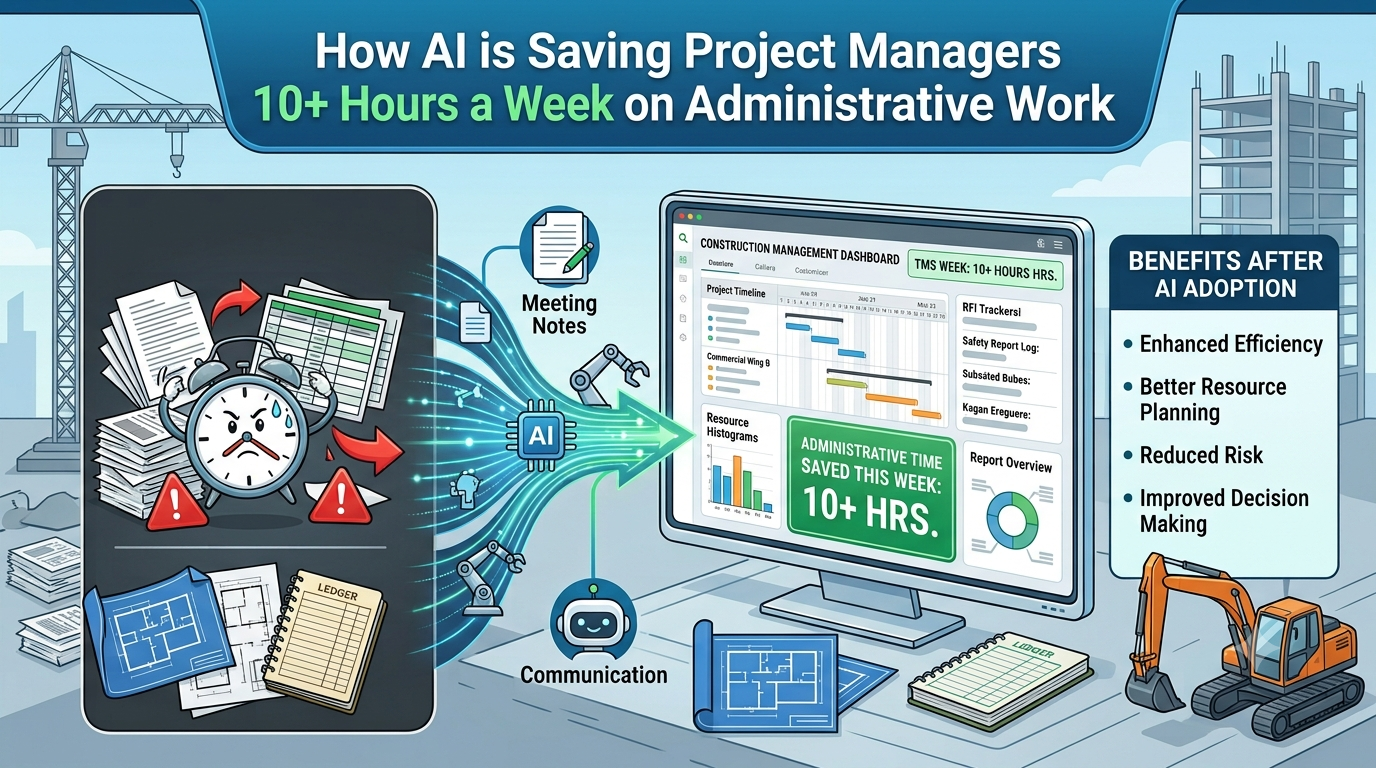
Enter AI project management. By automating record-keeping and streamlining communication, AI is saving project managers 10+ hours every week. That’s more than 500 hours annually — time that can be redirected toward strategic oversight, safety, and client relationships.
The adoption of AI in construction industry solutions is accelerating across multiple cities. Contractors are discovering that AI doesn’t just cut costs — it reduces risk, improves compliance, and enhances collaboration across every job site.
The Administrative Burden in Construction
Project managers face three major pain points:
- Manual record-keeping: Daily logs, RFIs, submittals, and compliance reports often consume 4–6 hours per week.
- Communication gaps: Field crews and office staff struggle to stay in sync, leading to delays and costly mistakes.
- Regulatory compliance: Contractors must adhere to OSHA standards, state-specific safety laws, and municipal permitting requirements.
A Houston-based general contractor reported that manual documentation consumed nearly 20% of a project manager’s weekly hours. Without automation, these tasks drain productivity and increase risk.
This is where AI project scheduling and automation step in.
How AI Automates Record-Keeping
Daily Logs and Reports
AI-powered platforms like Constant Builder automatically generate daily logs by pulling data from field apps, sensors, and worker inputs. Instead of manually typing notes, project managers receive auto-generated summaries that capture weather conditions, crew hours, and equipment usage.
- Saves 2–3 hours weekly
- Reduces human error
- Creates searchable archives for compliance audits
RFIs and Submittals
AI tools can scan RFIs and submittals, categorize them, and route them to the right stakeholders. In larger projects it often involves dozens of subcontractors, this automation prevents bottlenecks.
- Cuts 1–2 hours weekly
- Ensures faster turnaround times
- Improves subcontractor accountability
Compliance Documentation
For state-funded projects in Austin or San Antonio, compliance reporting is non-negotiable. AI-driven construction document automation ensures that OSHA logs, safety reports, and inspection records are automatically formatted and filed.
- Saves 2–3 hours weekly
- Reduces risk of fines
- Provides real-time compliance dashboards
Test drive Constant Builder Today
AI-Powered Field-to-Office Communication
Communication breakdowns are one of the top causes of project delays. AI bridges this gap with field office communication AI solutions.
Voice-to-Text Reporting
Field supervisors can dictate updates into mobile apps, which AI transcribes and sends to office dashboards. This eliminates the need for manual note-taking.
- Saves 1–2 hours per week per individual
- Improves accuracy of field reports
Predictive Alerts
AI systems analyze field data to predict potential delays — such as equipment shortages or weather risks — and notify office staff before issues escalate.
- Reduces miscommunication by 40%
- Prevents costly rework
Real-Time Dashboards
Office teams in Dallas can view live updates from job sites, ensuring that scheduling, procurement, and subcontractor coordination remain aligned.
- Saves 2–3 hours weekly
- Enhances collaboration across departments
Predictive Scheduling with AI
Traditional scheduling tools rely on static timelines. AI introduces predictive scheduling, which adapts to real-time conditions.
- AI project scheduling platforms analyze weather forecasts, crew availability, and subcontractor performance.
- They automatically adjust timelines, preventing delays before they occur.
- Constant Builder’s general contractors report 15% faster project completion after adopting predictive scheduling.
This not only saves time but also improves client satisfaction by ensuring projects stay on track
ROI: Saving 10+ Hours Weekly
When you add up the time savings:
- Record-keeping automation: 4–6 hours
- Field-to-office communication: 3–4 hours
- Predictive scheduling: 2–3 hours
That’s 10+ hours every week — equivalent to more than 500 hours annually per project manager. For Texas firms, this translates into $25-35k in cost savings per PM per year.
Constant Builder: Your Partner in Construction Management
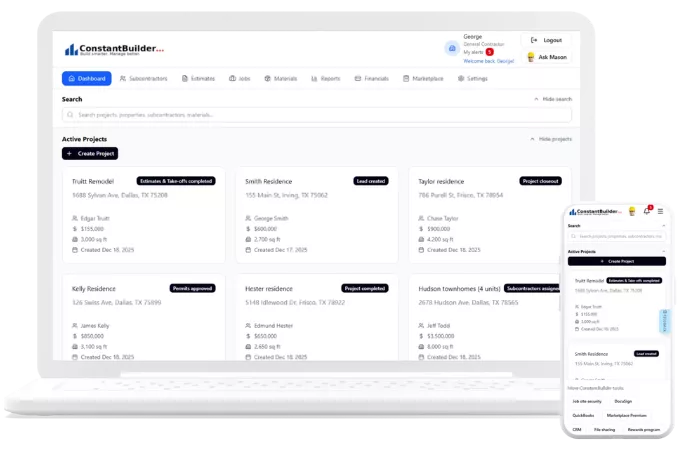
At Constant Builder, we understand the challenges contractors face in managing projects, teams, schedules, and budgets. Our construction management solutions are designed to help contractors streamline operations, improve productivity, and achieve better project outcomes through smart automation and efficient workflows.
Whether you’re managing residential, commercial, or industrial projects in Houston, Texas, or anywhere across the United States, Constant Builder provides the tools and expertise needed to simplify project management. From automated scheduling and document management to real-time collaboration and reporting, our solutions help contractors reduce administrative tasks and focus on delivering quality work.
By leveraging modern construction automation tools, Constant Builder empowers contractors to save time, improve communication, increase profitability, and stay competitive in today’s fast-paced construction industry.
Conclusion:
AI is not replacing project managers — it’s empowering them to get more done, faster, in the same or less time. By automating record-keeping and enhancing communication, Texas contractors are setting a new standard for efficiency.
The future of AI in construction industry lies in predictive analytics, subcontractor bidding, and compliance automation. And Texas, with its booming construction sector, is leading the charge.
AI project management is revolutionizing the construction field by helping contractors streamline complex workflows and improve project outcomes. Subcontractors remain the backbone of construction, from electrical and plumbing specialists to steel fabricators and finishers, delivering the expertise that keeps projects moving. Yet managing subcontractors has always been one of the most challenging aspects of construction.
With AI project management tools, contractors in Texas and across the United States can leverage predictive scheduling, optimize subcontractor bidding, and reduce costly delays. By automating scheduling, resource allocation, and communication, AI-enhanced project management ensures smoother coordination, better risk forecasting, and more efficient delivery of residential, commercial, and industrial projects.
👉 Constant Builder Build with Confidence
FAQ
1. How is AI used in the construction industry?
AI improves scheduling, safety monitoring, bidding, and compliance reporting, helping contractors deliver projects faster and safer.
2. Why is AI project scheduling important for U.S. contractors?
It helps avoid costly delays, improves subcontractor coordination, and ensures projects finish on time.
3. Is AI project management replacing human managers?
No. AI enhances project managers’ efficiency by handling repetitive tasks, allowing humans to focus on strategy and leadership.
4. What is AI project scheduling?
AI project scheduling uses algorithms to predict delays, adjust timelines, and optimize resource allocation automatically.