
Warranty Tracking Software for GCs and Homeowners
Closing day feels like the finish line, but for most GCs it’s really the start of a new phase — the warranty period. Over the next one, two, or ten years, homeowners will call about squeaky floors, hairline cracks, and HVAC quirks, and every one of those calls has to be logged, categorized, and resolved. Without dedicated construction warranty tracking software, that work gets buried in inboxes, text threads, and sticky notes — and it’s usually the first thing to fall through the cracks once a crew has moved on to the next job.
This guide covers why post-closing warranty claims are such a persistent pain point, what a proper home warranty management system should do, and how a modern warranty tracking module protects both a homeowner’s trust and a GC’s bottom line.
Why Warranty Claims Are a Post-Closing Pain Point for GCs
Builder warranty claims rarely come in through one channel. A homeowner might call the office, text the supervisor directly, or email whoever they last spoke with — and each of those touchpoints creates a separate, disconnected record of the same issue.
Without a system built specifically for this phase of the project, we see several things go wrong consistently:
- Claims get lost between the GC’s office, the super, and the subs who actually need to fix the issue.
- Few GCs track which items fall under a 1-year workmanship warranty versus a longer structural or manufacturer’s warranty, so response deadlines get missed.
- There’s no record of what was promised, fixed, or rejected— which turns into disputes when a homeowner disagrees with how a claim was handled.
- Recurring issues across projects go unnoticed because things are not tracked in one place.
A dedicated warranty tracking system turns this scattered, reactive process into something structured, accessible (desktop or mobile) and provable.
What Homeowners Expect After Move-In
Homeowners moving into a new build or a completed remodel expect the same responsiveness during the warranty period that they got during construction. In practice, that means:
- A clear, simple way to submit an issue — not a guessing game about who to call.
- Confirmation that their claim was received and is being handled, not silence.
- A reasonable timeline for a response, especially for anything safety-related like HVAC or plumbing.
- Visibility into the fix once it’s scheduled — not just a promise that “someone will be in touch.”
When that experience doesn’t exist, warranty issues become the thing homeowners remember most about working with a builder because it’s often times their last set of interactions with the Builder — regardless of how well the actual construction went.
What a Warranty Tracking Module Should Do
A true home warranty management system needs to do more than log complaints. Look for these core capabilities:
- Centralized claim submission — one place for homeowners to report an issue, instead of phone, text, and email all landing in different spots.
- Automatic categorization by coverage type (workmanship, systems, materials, structural) so response deadlines are clear from the start.
- Assignment to the correct sub or vendor, with due dates and status tracking.
- Homeowner-facing status updates, so “is anyone looking at this?” never becomes a phone call.
- Photo and note documentation attached to every claim, creating an evidence-based record if a dispute comes up later.
- Reporting that surfaces recurring issues by subcontractors, materials, or build process gaps — so patterns get fixed at the source, not repeatedly patched.
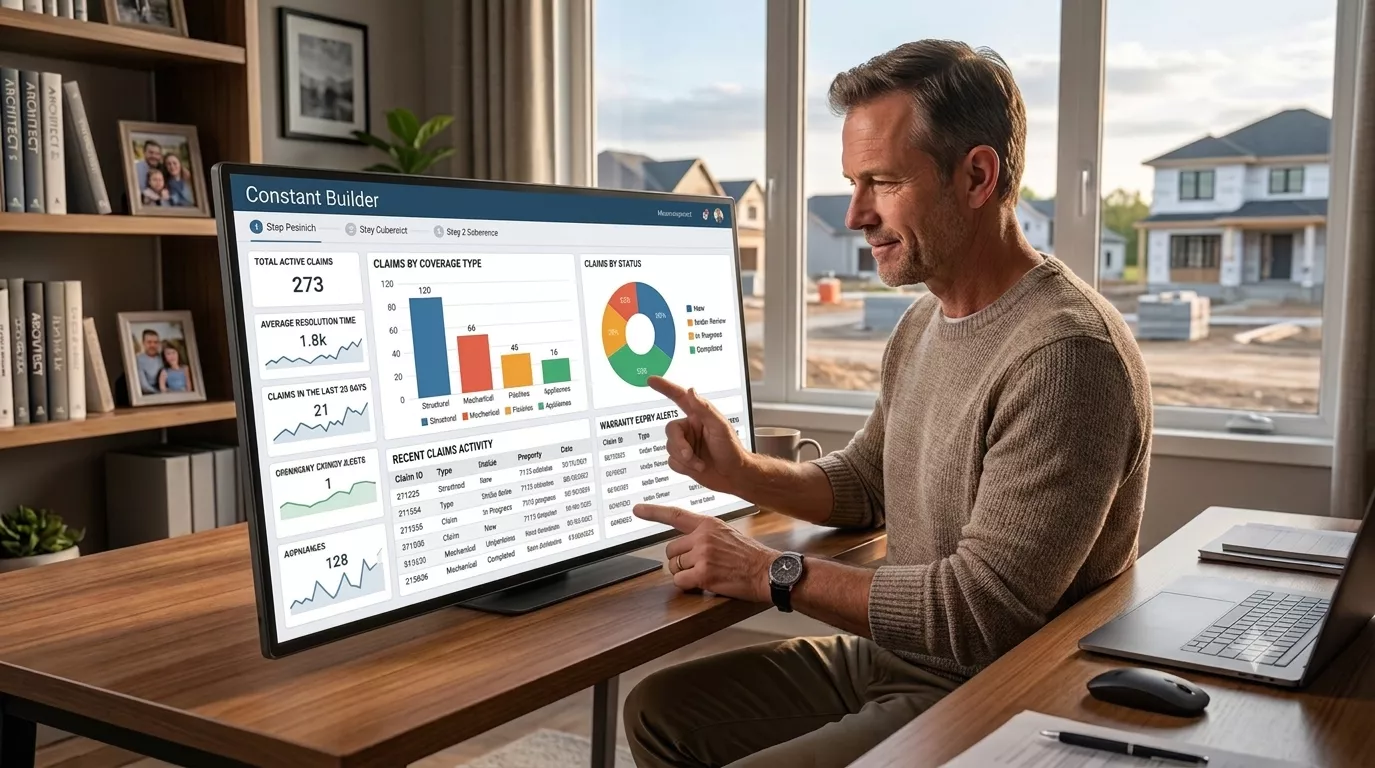
Try Constant Builder's warranty module in the FREE Homeowner's app
How Constant Builder’s Warranty Module Works
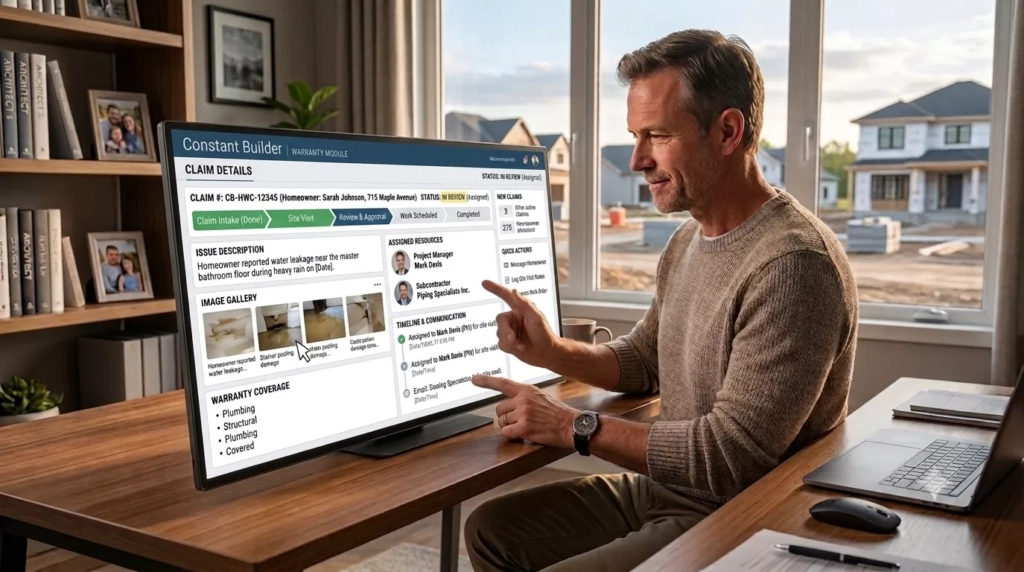
Constant Builder gives homeowners a free portal access to their build project that is used during construction. Extending this into the warranty period. When something comes up after move-in, a homeowner submits it directly through their portal — with a photo, if needed — instead of guessing who to call.
From there, the claim is automatically tagged by coverage type and assigned to the right sub or vendor, with a due date attached. Everyone involved — GC, sub, and homeowner — can see the claim’s status updated in real time, from submitted to scheduled to resolved.
Because it’s built into the same platform used for closeout, warranty claims connect naturally to work already tracked on the punch list, making it easy to see whether a post-closing issue is a new warranty item or something that should have been caught before handover.
GCs reduce Callback costs and Protecting Your Reputation
Every unstructured warranty callback costs a GC more than the fix itself — it’s the truck roll, the scheduling back-and-forth, and the sub’s time away from a paying job. Tracking claims in one system makes those costs visible instead of absorbed silently.
- Spotting patterns — if the same issue keeps showing up across multiple builds, it points to a material or sub-quality problem worth fixing at the source.
- Proving response time — a documented record protects a GC if a homeowner claims an issue was ignored.
- Protecting online reputation — homeowners who feel heard during the warranty period are far more likely to leave a positive review than one who had to chase down a response.
- Supporting referrals — a smooth warranty experience is often what turns a homeowner into a referral source for future business.
See what Constant Builder's homeowner app surfaces → Start a free trial
FAQ
1. What is construction warranty tracking software used for?
It’s used to log, categorize, assign, and resolve homeowner warranty claims that come in after a project closes — replacing scattered calls, texts, and emails with a single documented record.
2. How long do builder warranties typically last?
Coverage varies by category and by state, but most builder warranties include a 1-year workmanship period, a longer systems period (often 2 years) for items like HVAC and plumbing, and a manufacturer’s warranty that can extend up to 10 years but may not include labor.
3. Can homeowners submit warranty claims themselves?
With a platform like Constant Builder, yes. Homeowners can submit claims directly through their own Homeowner app, with photos and notes, instead of relying on a phone call, text or email to reach the builder.
4. Does warranty tracking software replace a home warranty company?
No. A home warranty company insures against certain repair costs; warranty tracking software is the operational system a GC uses to manage, document, and resolve claims — whether or not a third-party warranty company is also involved.
5. How does warranty tracking reduce costs for GCs?
By surfacing recurring issues by sub, material, or build, warranty tracking lets a GC fix root causes instead of repeatedly paying for the same callback — while a documented response record also reduces the risk of disputes turning into costly, drawn-out conflicts.
Ready to Stop Managing Warranty Claims by Text?
Constant Builder’s warranty tracking module is built into the same platform your team already uses for scheduling, invoicing, and punch lists — so post-closing claims stop living in a separate inbox.