
How Construction Management Platforms Improve Contractor–Client Collaboration
If you’ve been in construction for any length of time, you already know the hardest part of the job isn’t always the hands-on building. It’s the communication.
Homeowners want updates. They want to know when the cabinets are arriving, why the weather delayed the foundation pour, and whether that change order they approved last week is in progress. Meanwhile, you’re trying to keep crews moving, materials on track, and subs paid on time. Somewhere in the middle, the conversation breaks down.
That breakdown is where projects get messy. Change orders get missed. Punch lists get ignored. And suddenly a job that started smoothly ends with a homeowner who feels like they were left in the dark.
This is exactly why more contractors are moving away from spreadsheets and text messages toward a dedicated construction management platform. It’s not about having fancier software. It’s about keeping everyone on the same page so you can build without the communication headaches.
Why Contractor–Client Communication Gets So Messy
Let’s be honest about how most projects still run.
The general contractor texts the homeowner a photo of the framing. The homeowner emails back a question about the window placement. The GC forwards that email to the sub, who replies via text. A week later, nobody remembers whether that window change was actually approved or just discussed.
On top of that, you’ve got punch lists floating around on paper or buried in old emails. Warranty items get mentioned in passing and then forgotten until the homeowner calls six months later wondering why nobody fixed the faucet leaking in the kitchen.
When communication happens across a half dozen different channels, things slip. And when things slip, trust slips too.
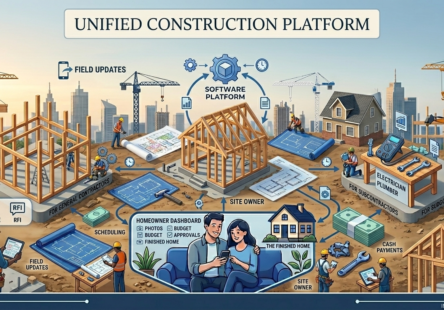
A construction project management software platform helps solve this by creating a single, shared record of every conversation, approval, and task. There’s no “I thought you said” or “I never got that email.” It’s all right there.
What a Contractor Management Platform Does Differently
If you’ve never used a construction management platform, it’s easy to think it’s just another app to learn. But the difference shows up in how you, your team and your homeowners stay connected throughout the project.
1. One place for all updates. Instead of texting photos to homeowners or emailing progress reports, everything goes into the platform. Clients log in when they want, see exactly where things stand, and don’t have to track you down for answers. You stop spending evenings answering the same questions over and over.
2. Punch lists that don’t disappear. Homeowners can submit punch list items directly into the system. You see them immediately. Subs get assigned. Work gets done. Nothing sits forgotten on a sticky note or buried in an email thread.
3. Change orders with a clear trail. When a homeowner requests a change, it goes into the platform with all the details. Approvals are tracked. Costs get updated. Everyone knows what was agreed to and when. No more surprises at the end of the job.
4. Warranty tracking that keeps clients happy. After the project wraps, warranty items can still be managed through the same system. Homeowners register with manufactures via the platform and when there’s a problem, they submit requests into the system. You respond. The work gets done without endless back-and-forth texts months later.
How Better Collaboration Saves You Time and Headaches
When clients feel informed, they ask fewer questions. When they have a place to see progress on their own, they don’t call you every afternoon for an update.
That freedom adds up. Instead of spending your day responding to messages, you spend it actually managing the work. Subs stay scheduled. Materials get ordered. Problems get handled before they blow up.
A solid construction management platform also protects you when disagreements come up. Everything is documented. If a homeowner says they approved something they didn’t, or claims you never addressed a punch list item, you’ve got a clear record to reference. It’s not about being confrontational—it’s about having clarity when you need it.
What to Look for in a Platform
Not every tool designed for contractors actually improves collaboration. Some are built more for internal project management than for client communication. When you’re evaluating options, look for a few key things:
- A client-facing portal.Homeowners should be able to log in and see progress, punch lists, and warranty items without needing you to walk them through it.
- Mobile access. You need to update things from the job site. Homeowners need to check in from their phone. If the platform doesn’t work well on mobile, it’s going to create more friction, not less.
- Document storage that’s easy to share. Permits, Change orders, approved drawings, signed contracts—these should live in one spot where both you and the homeowner can access them.
- Clear notification system. You don’t want to be buried in alerts, but you also don’t want to miss a homeowner’s request as soon as possible. Good platforms let you control what you’re notified about.
Constant Builder: Built for Real Contractor–Client Collaboration
This is exactly how Constant Builder was designed.
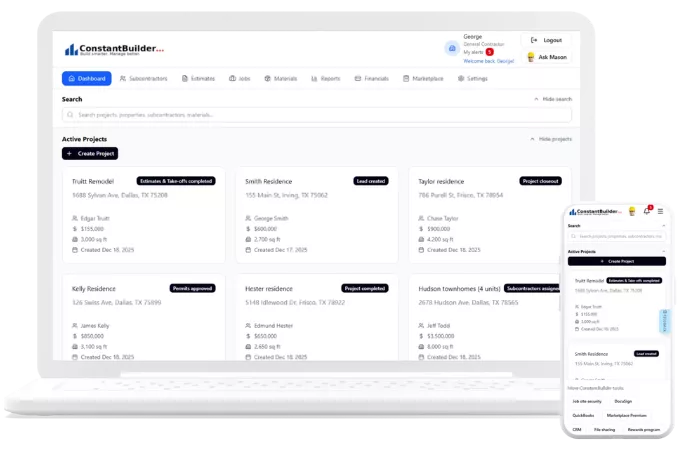
We built it for general contractors who were tired of juggling texts, emails, and paper punch lists. The platform gives homeowners a free portal where they can see real-time updates, submit punch list requests, and track warranty items long after the job is done.
For general contractors, everything lives in one place—scheduling, estimating, invoicing, and communication. You’re not jumping between apps to answer a homeowner’s question. You see what they see, and they see the milestones you’re working towards.
Subcontractors benefit too. They get job assignments, submit invoices, and track payments without chasing down the GC. When everyone involved in a project—GC, subs, and homeowner—is working from the same system, collaboration stops being a struggle and just becomes how the job runs.
The result? Fewer late-night emails. Fewer misunderstandings. And homeowners and subs who feel like they were part of the process, not left wondering what happened.
Final Thoughts
Good communication isn’t just about keeping clients happy. It’s about keeping your projects profitable.
When you spend less time managing questions and chasing approvals, you have more time to manage the work. When homeowners feel informed, they trust you more. And when trust is high, referrals follow.
Moving to a dedicated construction management platform won’t change the fact that construction is hard. But it will take the communication chaos out of the equation—and that alone makes every project smoother.
If you’re ready to stop juggling texts, emails, and scattered punch lists, take a look at Constant Builder. The homeowner portal is free, and you can try the full platform with your team before committing.
Want to see how it works? Start with a free trial and test it on your next project. Your homeowners and subcontractors will notice the difference before you even tell them.
FAQ
A contractor management platform helps businesses manage subcontractors, assign tasks, track progress, and maintain clear communication across all project stages.
Contractors need a construction management platform to streamline workflows, reduce manual work, and gain real-time visibility into project progress.
Yes, construction platforms improve client collaboration by providing real-time updates, document sharing, and transparent communication.
It improves productivity by automating workflows, assigning tasks, tracking performance, and reducing communication gaps between teams.
Key features include:
Project scheduling
Task management
Document sharing
Real-time updates
Contract management
Reporting and analytics
Contractors in Dallas, Houston, San Antonio, Austin, Fort Worth, and El Paso can improve project efficiency by using a construction management platform to track progress, manage teams, and streamline workflows.
Contractors in Miami, Orlando, Tampa, West Palm Beach, and Jacksonville can benefit from a contractor management platform that offers real-time updates and better coordination.
Construction companies in Phoenix and Tucson use construction management platforms to manage schedules, contracts, and team communication effectively.
Construction platforms are used by general contractors, subcontractors, builders, real estate developers, and infrastructure companies.